Geo Treasures Nexus Approach
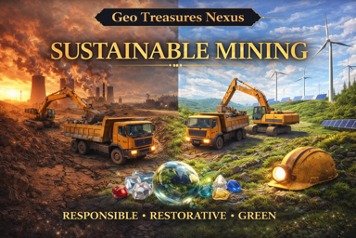
At Geo Treasures Nexus, mining is approached as a scientific, sustainable, and socially responsible enterprise:
* Mining methods and blasting are designed to respect geological and fossil heritage.
* Mine planning and closure prioritize environmental sustainability and community welfare.
* Challenges are addressed with innovative solutions, geoscientific insights, and academic collaboration.
* Continuous monitoring of rocks, minerals, fossils, and seismic activity ensures safe and sustainable operations.
Our Mission: To advance mining that maximizes resource use, minimizes environmental impact, and promotes societal benefits.
Our Vision: A mining sector where science, sustainability, and community engagement converge, safeguarding Earth’s geological treasures for present and future generations.
Mining: Methods, Planning, and Sustainable Practices
Mining is the cornerstone of natural resource extraction, connecting geology with industry, technology, and environmental stewardship. At Geo Treasures Nexus, we explore mining comprehensively—covering methods, planning, operational challenges, and sustainable solutions.
Blasting in Mining
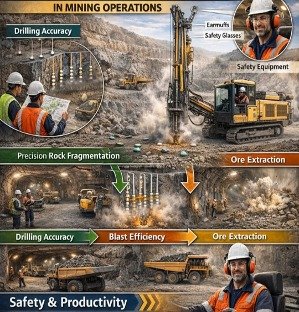
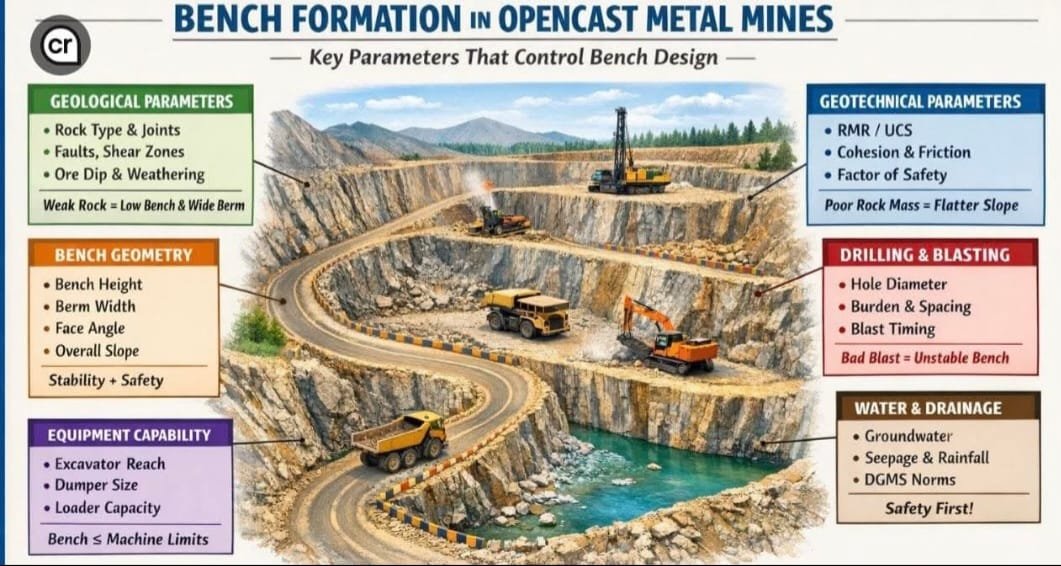
Blasting is critical in rock excavation and ore extraction. Proper blasting enhances productivity, reduces operational costs, and ensures safety. Techniques include:
• Drill and blast – Drilling holes, filling them with explosives, and controlled detonation.
• Controlled blasting – Minimizes ground vibrations and damage to surrounding structures.
• Pre-splitting and cushion blasting – Used for precise rock fragmentation in sensitive areas.
Mine Planning
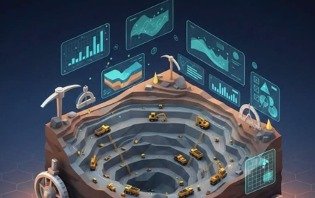
A robust Mine Plan is essential for safe, efficient, and economically viable mining operations. Key components:
• Resource estimation and ore body modeling – Understanding deposit geometry, grade distribution, and reserve quantification.
• Production scheduling – Balancing ore extraction with processing capacity.
• Equipment selection and layout planning – Ensuring optimal machinery utilization.
• Environmental and safety compliance – Integrating regulations and sustainability measures.
Mine Closure Plan
Responsible mining includes planning for Mine Closure from the outset. Closure plans focus on:
• Land reclamation and rehabilitation – Restoring ecosystems and landscapes.
• Waste management – Safe disposal of tailings and mine water.
• Post-mining land use – Agriculture, forestry, or recreational development.
• Monitoring and risk management – Ensuring long-term environmental safety.
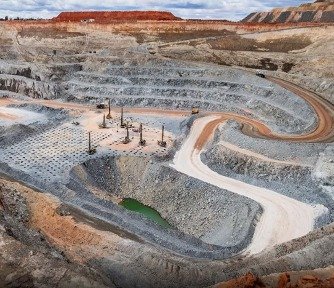
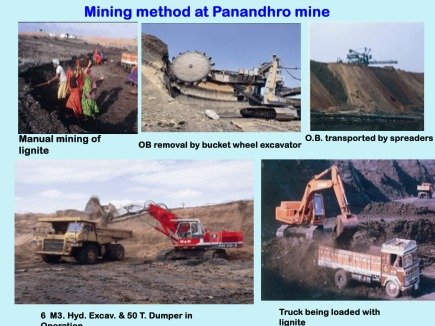
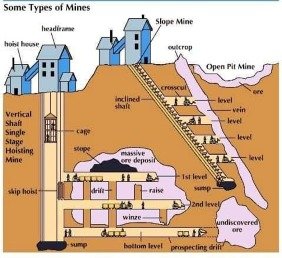
Different geological conditions require different mining techniques. Each method is selected based on factors such as depth, ore concentration, environmental impact, and economic feasibility.
Mining Problems & Solutions
Mining faces challenges that require technical and strategic solutions:
• Ground instability and subsidence – Addressed via proper geotechnical assessment, backfilling, and support structures.
• Water ingress and flooding – Controlled through dewatering systems and hydraulic engineering.
• Environmental impacts – Mitigated by dust suppression, effluent treatment, and sustainable practices.
• Operational inefficiencies – Improved with automation, AI-driven monitoring, and optimized equipment utilization.
By integrating advanced mining methods, safety protocols, and sustainable practices, modern mining not only unlocks mineral wealth but also preserves environmental and social balance.
At Geo Treasures Nexus, we provide insights into the science, technology, and strategic planning behind successful mining operations worldwide.
6. Mining Problems & Solutions
Mining operations face a range of technical, environmental, and social challenges:
Problem Solution
Rock instability & slope failures Geotechnical monitoring, rock reinforcement, slope optimization
Groundwater contamination Water treatment systems, controlled dewatering, recycling
Air and dust pollution Dust suppression, filtration, and emission monitoring
Fossil & heritage site damage Geological mapping, protective buffers, controlled excavation
Earthquake risks & induced seismicity Seismic monitoring, blast optimization, geotechnical assessment
Inefficient extraction Advanced exploration, AI & automation, precision mining
Community conflicts & environmental concerns Stakeholder engagement, environmental education, transparency
7. Academic & Research Support
Academic collaboration strengthens mining sustainability and innovation:
• Geoscience & Mineral Research: Enhances understanding of rocks, minerals, and fossil-bearing strata for precise mining.
• Seismic & Geotechnical Studies: Supports safe mine layouts and earthquake-resistant operations.
• Innovation & Technology Development: Automation, AI, and smart monitoring improve efficiency and reduce environmental impact.
• Education & Training: Field studies, workshops, and research programs equip professionals with sustainable mining practices.
8. Geo Treasures Nexus Approach
At Geo Treasures Nexus, mining is approached as a scientific, sustainable, and socially responsible enterprise:
• Mining methods and blasting are designed to respect geological and fossil heritage.
• Mine planning and closure prioritize environmental sustainability and community welfare.
• Challenges are addressed with innovative solutions, geoscientific insights, and academic collaboration.
• Continuous monitoring of rocks, minerals, fossils, and seismic activity ensures safe and sustainable operations.
Our Mission:
To advance mining that maximizes resource use, minimizes environmental impact, and promotes societal benefits.
Our Vision:
A mining sector where science, sustainability, and community engagement converge, safeguarding Earth’s geological treasures for present and future generations.
Major Minerals and Ores
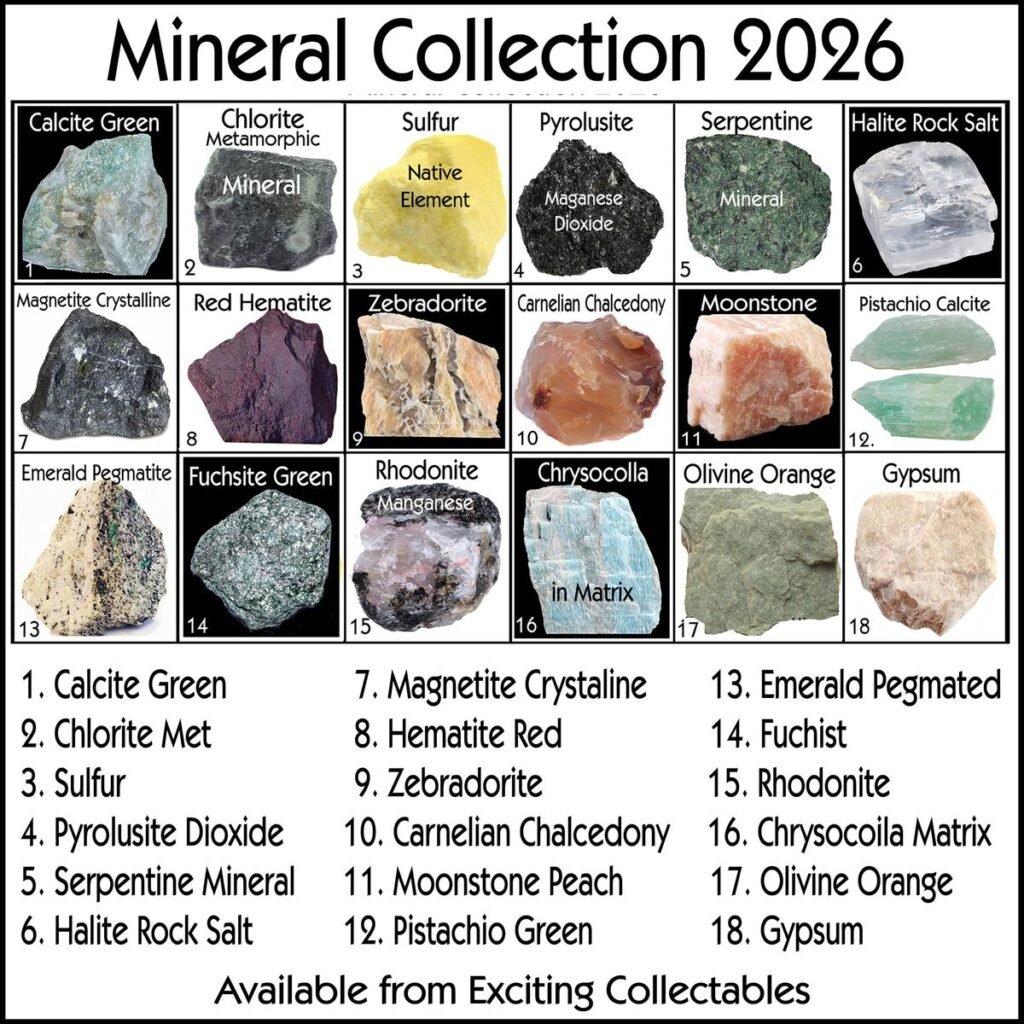
Mining provides a wide range of minerals and ores essential to industrial development and everyday life.
Coal and Lignite: Primary sources of energy for electricity generation and industrial fuel.
Bauxite: The principal ore of aluminum, used in transportation, packaging, and construction.
Limestone: A key raw material for cement, steel, and chemical industries.
Iron Ore: The backbone of the steel industry, crucial for infrastructure and manufacturing.
Copper: Widely used in electrical wiring, electronics, and renewable energy systems.
Rare Earth Elements: Critical for advanced technologies such as smartphones, wind turbines, electric vehicles, and defense applications.
Mining in India
India is rich in mineral resources and has a long history of mining activity. The country’s diverse geology hosts a wide variety of metallic, non-metallic, and energy minerals.
Major geological belts such as the Chota Nagpur Plateau, Dharwar Craton, and Aravalli Range contain significant mineral deposits. States like Odisha, Jharkhand, Chhattisgarh, Rajasthan, Gujarat, and Madhya Pradesh are key mining regions.
India’s mining sector operates under a structured policy framework that includes mineral conservation, environmental protection, and community welfare. Regulatory bodies and modern legislation aim to promote responsible mining while supporting economic growth.